Engineered to rigorous global performance benchmarks. Explore our factory-direct OEM/ODM commercial offerings.
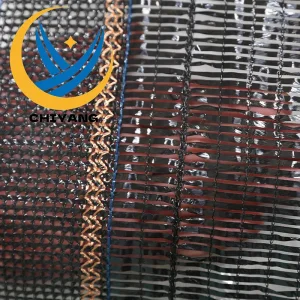
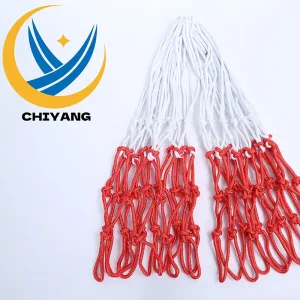
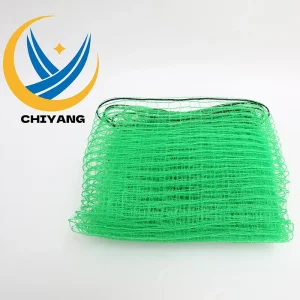
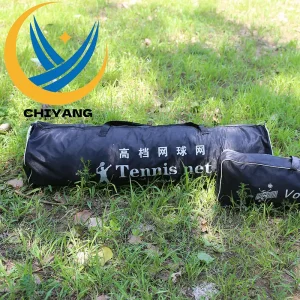
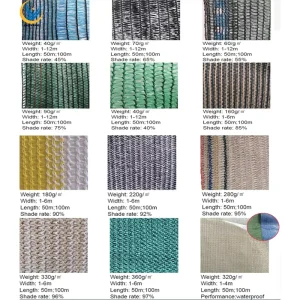
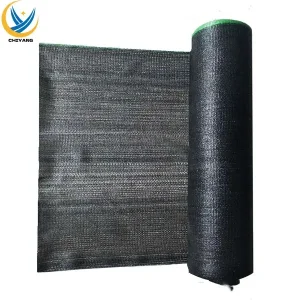
An Institutional Analysis of Demand Drivers, Material Advancements, and B2B Supply Chain Dynamics
The global sports infrastructure and agricultural perimeter market is undergoing a structural transition toward high-density, synthetic polymer barrier systems. Commercial golf ranges, professional baseball training facilities, multi-sport complexes, and modern agro-tech greenhouse setups require long-lifespan outdoor hitting nets capable of enduring extreme structural strain, high-velocity kinetic impacts, and intense solar radiation without mechanical degradation.
Traditional off-the-shelf netting solutions frequently fail due to insufficient denier count, poor UV stabilization index, and inadequate edge-binding construction. Modern procurement directors require ODM (Original Design Manufacturer) partnerships that offer full-stack customization: precise filament extrusion formulas, customized mesh geometry, reinforced vinyl hem borders, and automated load-distribution corner attachments.
Material Science Comparison: High-Density Polyethylene (HDPE), High-Tenacity Polyester (PET), and Nylon 6,6
| Polymer Specification | High-Density Polyethylene (100% Virgin HDPE) | High-Tenacity Polyester (PET Oxford) | Nylon 6,6 Monofilament / Multifilament |
|---|---|---|---|
| Tensile Strength (MPa) | 45 - 80 MPa (High Impact Resistance) | 150 - 240 MPa (Superior Mechanical Elasticity) | 200 - 320 MPa (Maximum Shock Absorption) |
| UV Degradation Resistance | Outstanding (Internal HALS UV Stabilizer Blend) | Moderate to High (Requires External UV Coating) | Moderate (Prone to Hydrolysis under High Humidity) |
| Specific Gravity (g/cm³) | 0.95 (Floats on Water, Zero Moisture Absorption) | 1.38 (Heavy Duty Drapery & Vector Stability) | 1.14 (Flexible Impact Containment) |
| Weaving Tech & Mesh Nodes | Raschel Warp Knotted / Knotless Interlock | Heavy-Duty Double-Stitching Woven Oxford | High-Impact Twisted Knotless Lattice |
| Primary Applications | Outdoor Golf Driving Ranges, Agricultural Shade/Bird Net | Professional Tennis Nets, Heavy Football Goals | High-Velocity Golf/Lacrosse Hitting Baffling |
Our proprietary HDPE formulation integrates premium grade HALS additive suites (specifically UV-944 and UV-622). This structural chemical bonding scavenges free radicals generated by photo-oxidation, retaining over 90% of tensile strength even after 50,000 hours of direct sun exposure in high-solar-irradiance zones.
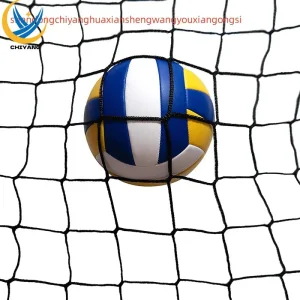
Hitting nets experience localized focal point strain during high-velocity impacts (e.g., golf balls traveling at 150+ mph). Our square and diamond knotless mesh geometries disperse impact forces radially across adjacent yarn filaments, eliminating strand shearing and extending fatigue life.
All outdoor hitting nets feature heavy-duty commercial vinyl borders, reinforced with multi-row lock-stitching, brass/stainless steel eyelets spaced every 12-24 inches, and internal lead-weighted or steel core ropes for continuous bottom ballast stabilization under wind loads.
Hardware Precision, Automated Production Lines, and Global Deployment Capability
Strength comes from visible hardware investment and scale accumulation. We possess 16 advanced warp-knitting and netting machines, which serve as fine instruments forming the core of efficient and intelligent production. These machines ensure that every process from polymer monofilament extruding to finished product trimming is precise and accurate, enhancing production efficiency while safeguarding product accuracy and structural consistency from the source.
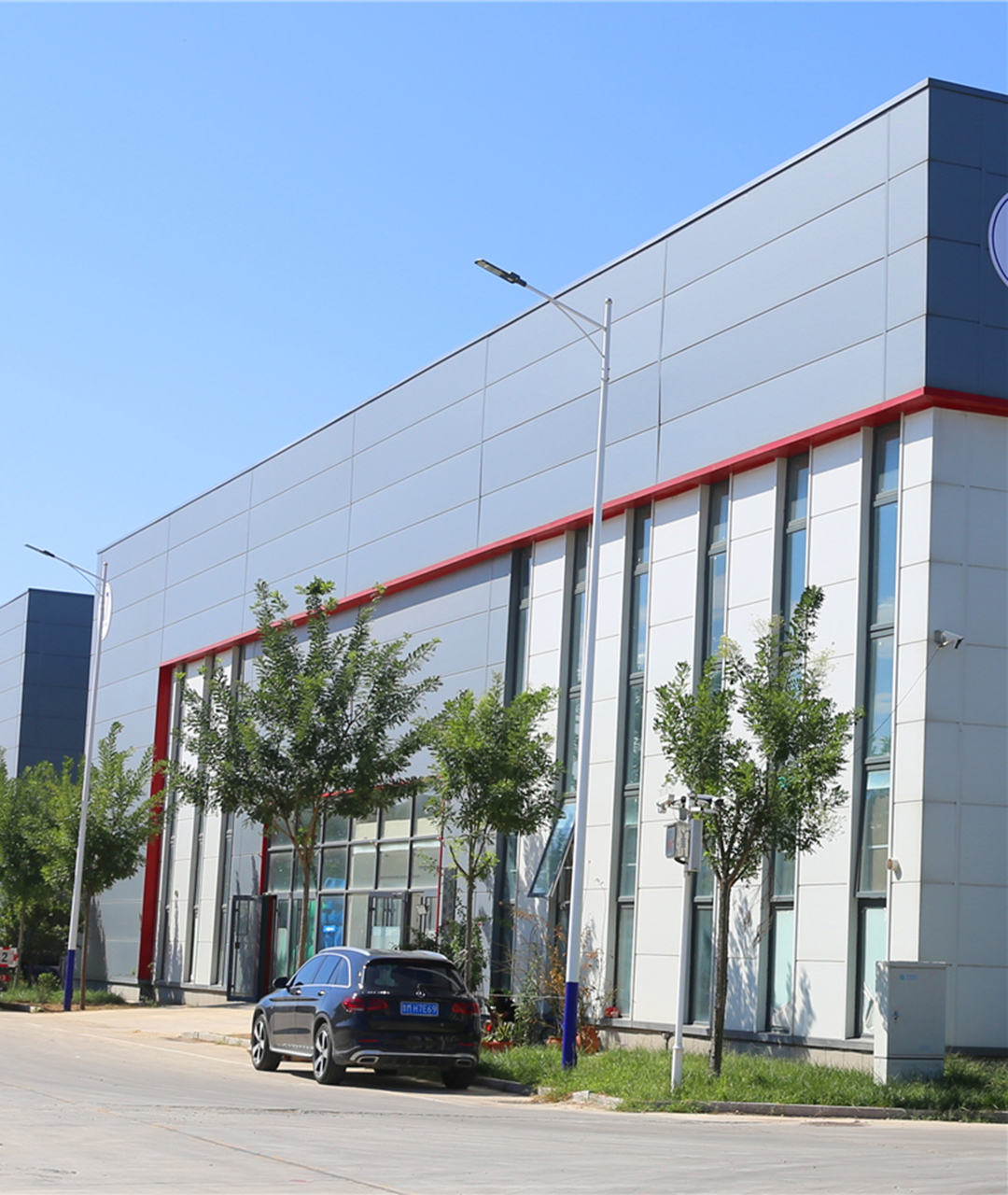
Located in a modern factory covering 6,800 square meters, we have built a scientifically planned and smoothly flowing production base. This spacious facility is not only a stage for automated production but also a solid support for raw material management, technology R&D, and multi-stage quality assurance. On this foundation, we achieve an outstanding monthly output of up to 800,000 square meters, meeting tight delivery deadlines effortlessly.
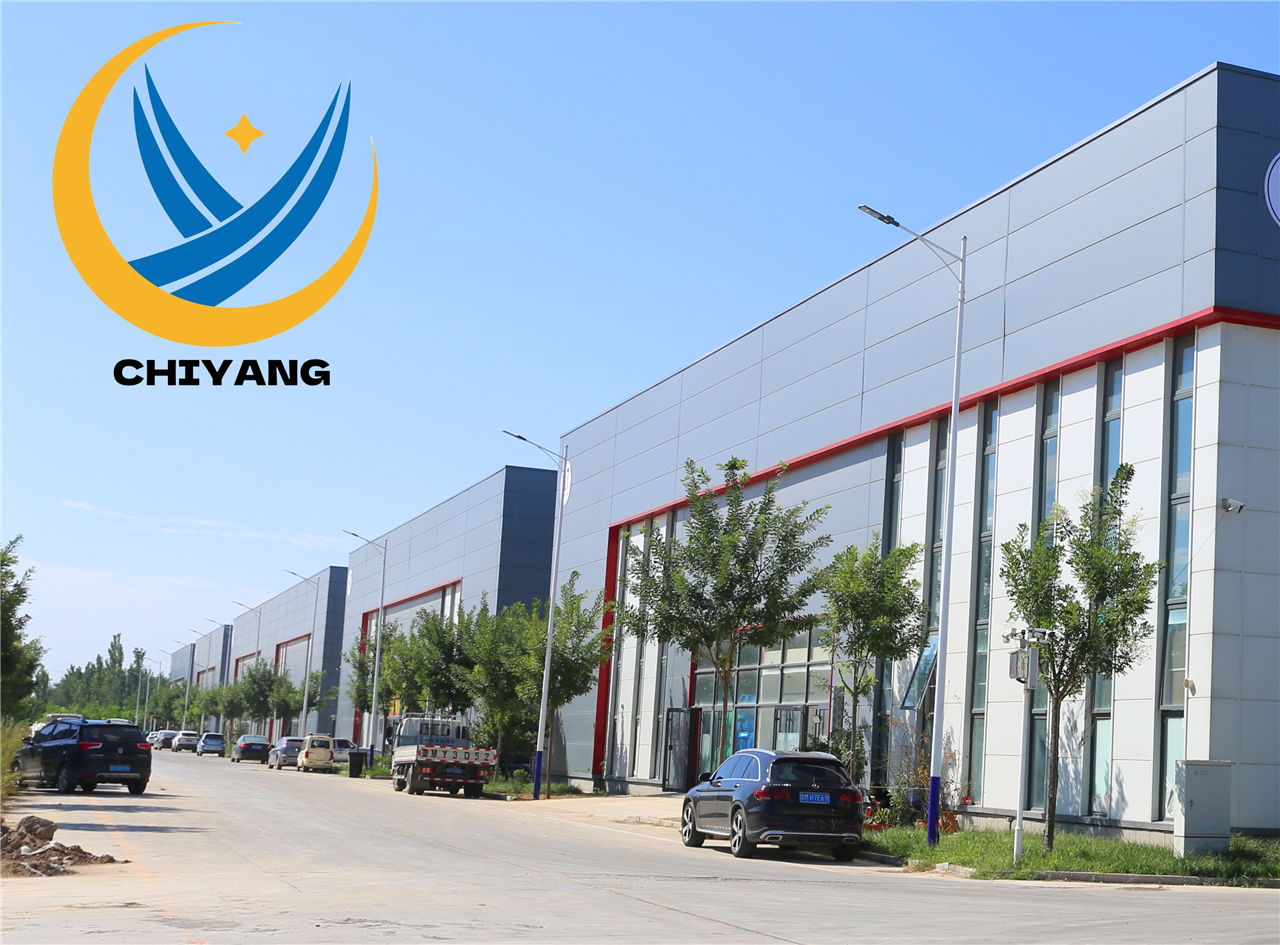
Behind our automated equipment is a dedicated team of 26 senior textile engineers, quality control specialists, and international logistics experts. With over 16 years of direct industry experience, our engineers oversee fiber density calibration, anti-ravel knot weaving, thermal setting, and border reinforcement tensioning.
Whether your project demands custom high-tensile impact baffles, wide-span golf enclosure netting, or specialized UV-blocking shade structures for agricultural facilities, our technical team turns engineering blueprints into industrial reality with flawless precision.
Multi-Stage Testing Protocols Embedded into Company DNA
Verification of virgin HDPE resin melt flow index (MFI), UV stabilizer blend ratio accuracy, and tensile elongation limits before yarn extrusion commences.
Continuous automated laser scanning across all 16 knitting machines to detect dropped stitches, uneven knot tension, or variable aperture sizes in real time.
Finished net panels undergo standardized drop-ball testing, pneumatic impact simulation, and tensile pull-break tests up to maximum load threshold (ASTM D5034/D5035).
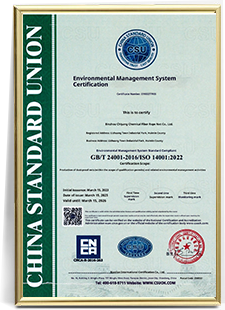
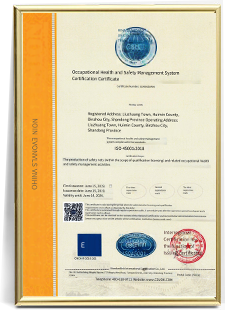
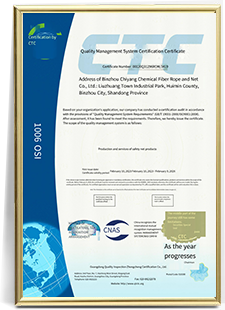
Fully compliant with global environmental and physical testing standards including ISO9001, REACH, RoHS, and ASTM UV aging test protocols.
From CAD Drafting & Filament Customization to Container Loading & Localized Fulfillment
Evaluation of physical environment, target impact velocity, UV indices, wind shear coefficient, and custom dimensioning. CAD rendering and structural modeling.
Monofilament color matching, denier selection (400D to 2500D+), mesh aperture optimization, and anti-aging additive masterbatch integration.
Precision machine knitting, thermal heat-setting to prevent knot slipping, heavy-duty perimeter sewing, and hardware eyelet/grommet installation.
High-density vacuum compression packaging to minimize shipping cubic volume, custom B2B barcoding, customs clearance support, and DDP/FOB shipping options.
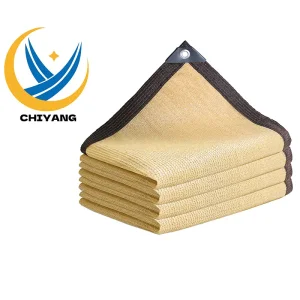
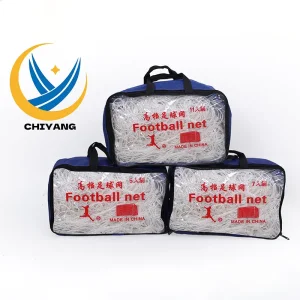
Browse our expanded portfolio of heavy-duty sports containment, agricultural shielding, and safety netting lines.
In-Depth Answers for Operations Directors, Supply Chain Managers, and Technical Buyers
 Chiyang Net