Engineered for high-altitude construction, agricultural enclosure, and heavy-duty structural load retention.
An authoritative analysis of material tensile dynamics, structural safety compliance, and global industrial procurement standards.
In modern industrial civil engineering, commercial skyscraper erection, and complex infrastructure expansion, elevated work environments present inherent kinetic hazards. Fall Safety Netting serves as the primary passive collective safety system (PCS) mandated by international safety authorities including OSHA (Occupational Safety and Health Administration), standardizing ANSI/ASSE A10.11, and European Norm EN 1263-1. China's manufacturing ecosystem has undergone a massive technological shift, transitioning from labor-intensive manual netting production to high-precision, warp-knitted Raschel polymeric systems equipped with advanced smart material science.
Understanding the difference between substandard consumer netting and heavy-duty structural safety nets requires analyzing impact energy conversion. When an object or worker falls, kinetic energy ($E_k = \frac{1}{2}mv^2$) must be absorbed dynamically without inducing destructive deceleration forces on the human body or structurally breaching the barrier. Advanced high-density polyethylene (HDPE), polypropylene (PP), and high-tenacity nylon 6,6 polymers manufactured across top-tier Chinese facilities are customized with proprietary heat-setting and UV-stabilization matrices to deliver reliable energy dissipation under extreme climatic conditions.
Modern fall safety nets rely on multi-filament elongation characteristics. Unlike rigid steel wire, high-tenacity synthetic polymers elongate up to 25%-35% under peak dynamic shock loading. This controlled plastic and elastic deformation prolongs impact time ($\Delta t$), drastically reducing peak shock forces ($F = \frac{\Delta p}{\Delta t}$) transmitted to anchor points and structural scaffolding.
Integrating high-precision machinery with lean supply chain logistics to guarantee dynamic stability and punctual delivery.
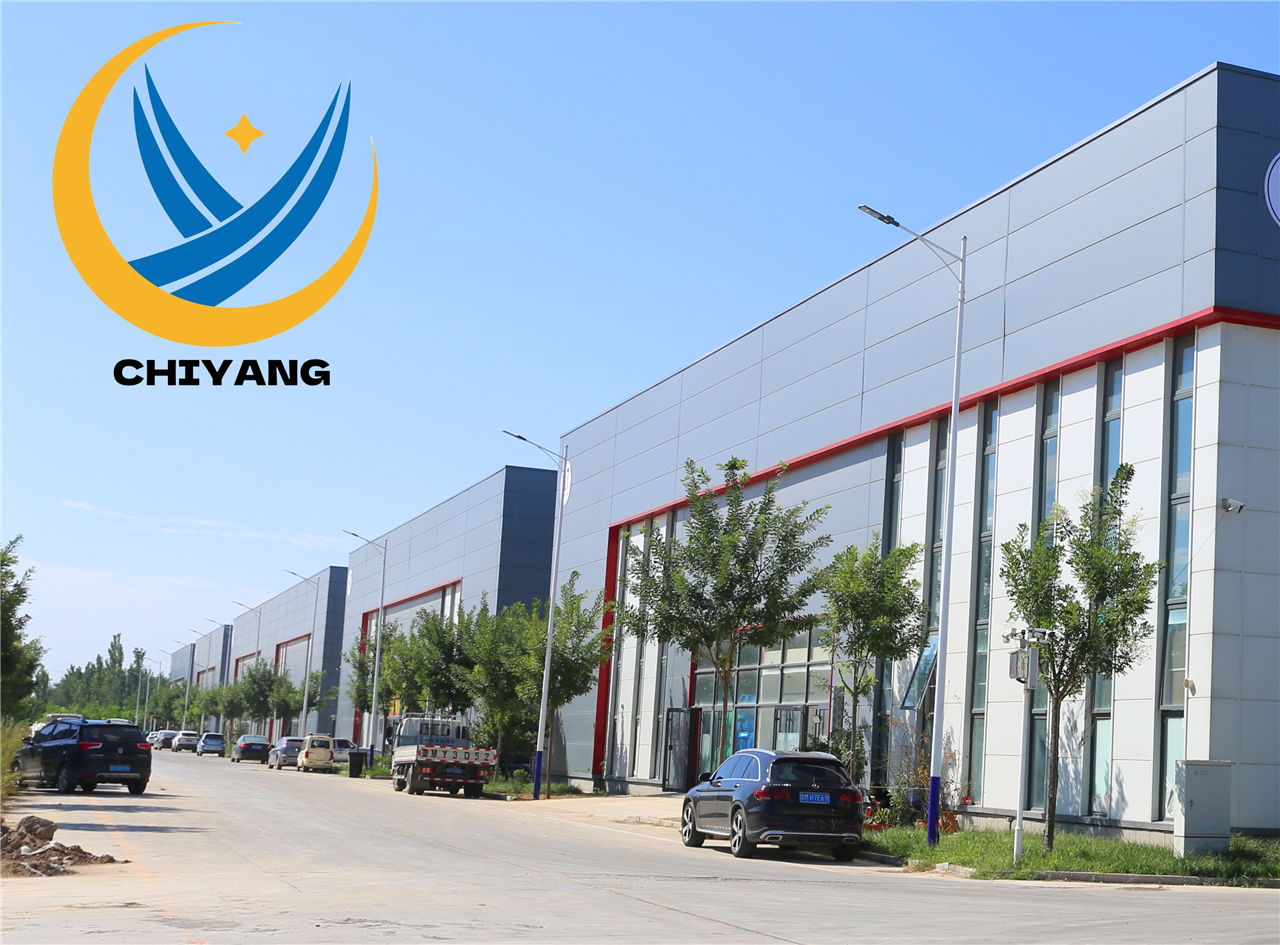
Manufacturing strength originates from direct hardware investment and operational rigor. Operating within a modern, scientifically optimized 6,800-square-meter facility, our production floors integrate 16 advanced high-speed warp knitting machines (including Karl Mayer multi-bar system technology). These precision instruments manage synthetic fiber tension with micro-millimeter tolerance, guaranteeing structural consistency across every square meter produced.
With an expansive operational footprint, our facility supports raw material polymer extrusions, heat-setting stenters, drop-test inspection rigs, and automated packaging lines. This integrated setup generates an outstanding monthly capacity of 800,000 square meters, providing global engineering firms and OEM distributors with rapid procurement turnarounds even during peak construction seasons.
100% virgin High-Density Polyethylene (HDPE) and virgin High-Tenacity Polyamides are tested for tensile yarn density, melt flow index (MFI), and masterbatch UV stabilization formulas prior to extrusion.
Automated optical sensor arrays monitor weave continuity, checking for missed stitches, knot slippage, and mesh dimensional uniformity during high-speed production runs.
Finished safety net batches undergo rigorous dynamic drop testing utilizing 100kg spherical mass impacts from heights exceeding 6 meters to verify compliance with EN 1263-2 and OSHA benchmarks.
Comparative structural matrix detailing synthetic yarn technologies, knot configurations, and climate-endurance chemistry.
Choosing the correct fall safety net configuration requires matching polymer chemistry with environmental stressors and dynamic safety requirements. Below is a comprehensive comparison matrix between primary polymer materials deployed across industrial jobsites globally:
| Polymer Material | Tensile Strength (MPa) | Elongation at Break | UV Weatherability | Abrasion Resistance | Primary Application Area |
|---|---|---|---|---|---|
| Virgin HDPE (High-Density PE) | 450 - 650 MPa | 20% - 30% | Excellent (HALS 944 Additive) | High | Debris containment, agricultural shade, scaffolding nets |
| High-Tenacity Nylon 6,6 (PA) | 700 - 900 MPa | 25% - 38% | Moderate (Requires UV Coating) | Superior | Personnel fall arrest nets, heavy-duty industrial safety |
| Polypropylene (PP) High Multi-Filament | 500 - 750 MPa | 18% - 25% | Good (Stabilized) | Moderate | EN 1263-1 System S boundary nets, rack guard netting |
| UHMPE (Ultra-High Molecular Weight PE) | 2800 - 3200 MPa | 3.5% - 5% | Extreme | Maximum | Extreme-load barrier nets, specialized defense/aviation enclosures |
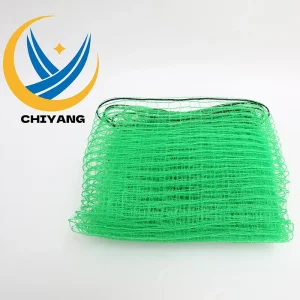
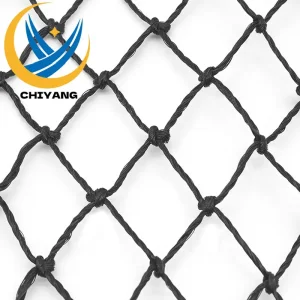
Knotless Nets: Engineered via interlocking loop strands without localized pressure points. Knotless Raschel safety netting reduces weight by 30%, eliminates surface friction wear at junction points, and maintains higher residual breaking force following prolonged exposure to outdoor wind vibration.
Knotted Nets: Ideal for high-rigidity applications and heavy physical barrier applications where fixed mesh dimensions under manual tension are critical.
Solar Ultraviolet Radiation (UV-A and UV-B) induces photo-oxidation in basic polyolefins, cleaving polymer chains and inducing micro-fractures. Advanced Chinese manufacturing utilizes Hindered Amine Light Stabilizers (HALS) coupled with nano-carbon black or titanium dioxide pigments. This guarantees that our shade and safety netting retain over 85% of initial tensile strength even after 5 to 8 years of continuous equatorial sun exposure.
Tailored protective netting architectures designed for high-risk industrial, infrastructure, and athletic installations.
Perimeter vertical safety nets and fine-mesh debris lining combined to prevent falling hand tools, concrete fragments, and construction material from threatening pedestrian walkways below.
Horizontal catch nets deployed beneath bridge decks, elevated highway overpasses, and structural steel erection zones to provide instant fall arrest protection for ironworkers.
Heavy-duty polypropylene mesh installed along pallet rack backings in high-bay logistics centers, mitigating inventory spill hazards and securing forklift operations.
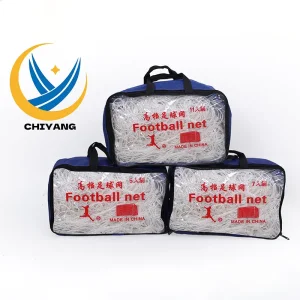
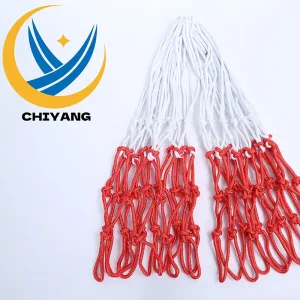
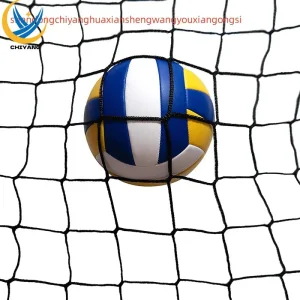
Custom-tailored nylon and polyester perimeter nets for football fields, tennis courts, and basketball complexes engineered to withstand continuous high-velocity impact shock.
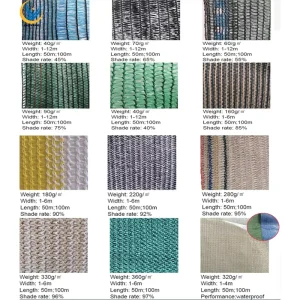
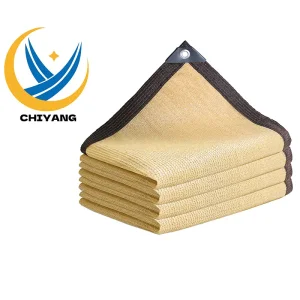
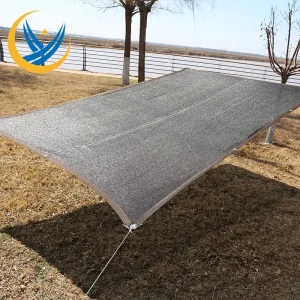
Dual-action shade and bird barrier netting optimized for horticulture, greenhouse environmental control, and photovoltaic panel hail protection in sensitive agricultural zones.
Salt-spray-resistant HDPE boundary safety networks treated for marine anti-fouling, safeguarding personnel on oil rigs, cargo vessels, and commercial port docks.
We believe quality is the true soul of manufacturing. Every product lot undergoes stringent mechanical testing to adhere to international jobsite specifications.
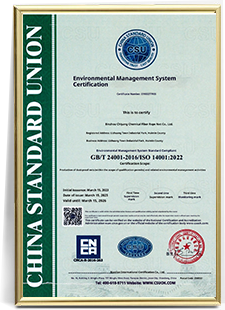
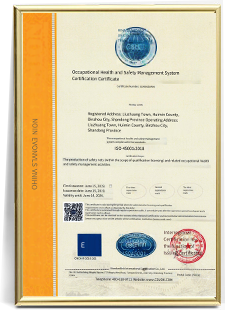
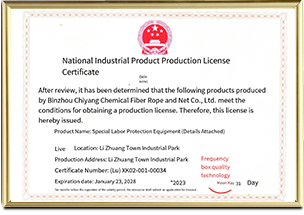
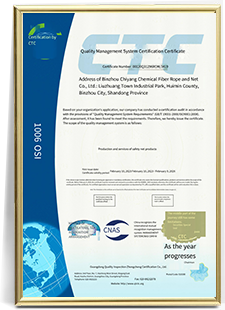
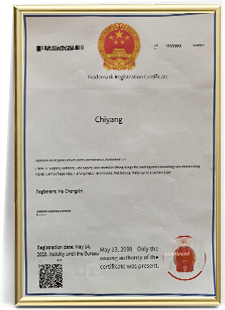
From raw material reception to final packaging, our quality control framework operates under ISO 9001:2015 guidance. Our netting products comply fully with core regulatory standards across target export regions:
Strategic direct-from-factory sourcing strategies designed for corporate buyers, EPC contractors, and global hardware distributors.
International procurement teams require customized specifications based on local regional legislation. Our engineering factory supports comprehensive OEM/ODM parameters:
Sourcing directly from a direct China manufacturer provides massive capital efficiency advantages compared to regional distributor markups:
Browse our complete range of specialized industrial, agricultural, and athletic netting systems.
Direct expert responses to critical purchasing, engineering, and compliance inquiries.
EN 1263-1 is the European Standard that classifies safety nets by mesh size and energy absorption capability (e.g., Class A2 = 2.3 kJ, Class B1 = 4.4 kJ) measured using dynamic test methods with a 100kg sphere. OSHA 1926.502 is the U.S. federal regulatory standard requiring a mandatory drop test of a 400-pound sandbag from the highest working surface or certification of equivalent dynamic load capacity by a qualified safety engineer.
Knotless Raschel knitted netting distributes dynamic shock load evenly across multi-directional loop matrices, eliminating concentrated stress points found at traditional knots. Furthermore, knotless nets prevent localized friction wear during high-wind movement, reduce net weight by roughly 25-30%, and offer significantly easier storage and deployment on jobsites.
Polymers like HDPE and Polypropylene degrade when exposed to solar UV radiation. We incorporate specialized Hindered Amine Light Stabilizers (HALS 944 / HALS 622) directly into the raw polymer melt during extrusion. This additive quenches free radicals formed during photo-oxidation, retaining over 85% of original tensile breaking strength after 5+ years of continuous high-uv exposure.
With our 6,800 square meter factory and 16 high-speed warp knitting machines yielding 800,000 m² monthly, standard custom OEM production cycles range from 12 to 20 business days after sample approval. Accelerated rush production schedules can be accommodated for critical engineering projects.
Yes. We offer flame-retardant masterbatch integration meeting international fire rating standards including NFPA 701, DIN 4102 B1, and BS 5867. Flame retardant additives self-extinguish molten drips, preventing fire spread during high-altitude welding or cutting operations on scaffolding.
Every production batch is assigned a unique batch tracking number. Random samples undergo destructive tensile breaking testing, drop impact simulation on our vertical test tower, mesh dimensions measurement, and border rope tension testing. Full Quality Inspection Reports (QIR) and Certificates of Analysis (COA) are provided prior to container loading.
 Chiyang Net