Choosing a reliable Net Shade For Patio supplier in China requires more than comparing catalog prices. Product quality can vary between similar-looking mesh fabrics, stitched edges, and mounting systems. This guide explores ten notable Chinese suppliers and explains how their capabilities may suit residential patios, restaurants, resorts, and outdoor commercial spaces.
The evaluation focuses on practical details that buyers can verify. These include fabric density, UV resistance, water behavior, shade percentage, edge reinforcement, eyelet placement, and available dimensions. A dependable supplier should provide clear material specifications, sample options, production photographs, and consistent quality control records. Factory experience also matters, especially when large orders require color matching, custom cutting, or reinforced hems.
Some suppliers may be strong in custom designs but slower during peak seasons. Others may offer competitive pricing while providing fewer fabric choices. No supplier is perfect. A ranking can also change as certifications, equipment, and export services develop. That uncertainty deserves attention.
Buyers should request a physical sample before approving bulk production. Check the mesh under direct sunlight. Inspect the stitching closely. Ask about packaging, replacement policies, installation accessories, and realistic lead times. These simple steps can reveal differences that online listings often hide. The following overview aims to offer balanced, experience-informed guidance for importers and project owners seeking durable patio shade solutions from China.
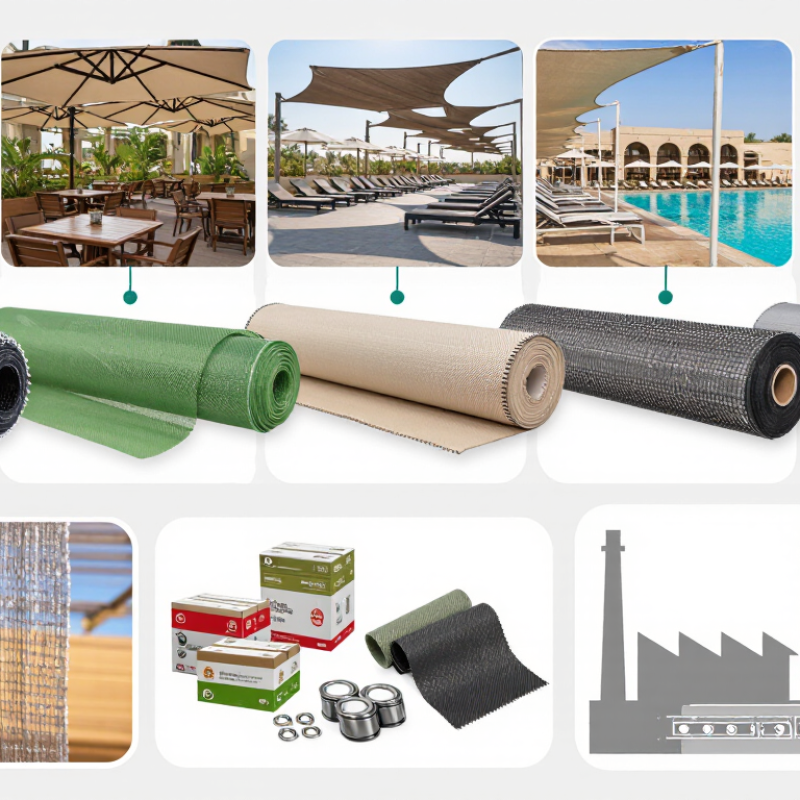
Patio net shades are practical outdoor fabrics, not simple decorative screens. They reduce direct sunlight, soften glare, and improve privacy around seating areas. The U.S. Department of Energy reports that exterior shading can limit solar heat gain more effectively than many interior coverings. That matters on a west-facing patio. The surface can feel noticeably cooler.
Material choice affects daily performance. High-density polyethylene mesh usually balances airflow, UV resistance, and durability. Polyester may offer finer texture, but it can stretch or fade sooner in harsh exposure. The fabric’s shade rating needs careful reading. A 90% shade cloth does not mean 90% heat removal. Wind direction, installation height, and surrounding walls also change the result. Small details matter.
Health protection deserves attention. The World Health Organization reported about 1.5 million non-melanoma skin cancer cases worldwide in 2020. A patio net shade cannot replace sunscreen or protective clothing, but it can reduce direct exposure during outdoor meals. For a China top-ten supplier review, buyers should check laboratory test methods, fabric weight, seam strength, and replacement-part availability. Ask for UV-resistance evidence, not only attractive product photos. I have seen specifications look convincing while lacking clear testing dates. That weakness deserves scrutiny. A supplier may also recommend an overly tight installation, which can increase wind stress and shorten service life. Examine drainage, anchoring, and seasonal removal requirements before ordering.
When evaluating Chinese net shade suppliers for patios, begin with material evidence, not attractive catalog images. Ask for the yarn type, mesh density, shade percentage, UV treatment, and coating details. A reliable supplier should provide current test reports and explain how samples were tested. Check whether the reported shade rate matches your climate and patio orientation.
Request a physical sample before discussing large quantities. I usually inspect the stitching, corner reinforcement, grommet spacing, and edge binding by hand. Weak seams often appear after several weeks of wind and tension. Measure the sample, expose it to sunlight, and compare color changes over time. Small defects matter.
Factory capability also deserves close attention. Confirm production equipment, quality-control steps, packaging methods, and realistic lead times. Ask for inspection photos from different production stages. Verify certificates through the issuing organization, rather than accepting copied files. Communication is another practical test. Clear answers usually indicate stronger process control, though not always.
Price can reveal useful information. It can also mislead. A low quotation may exclude testing, stronger hardware, or protective packaging. I once underestimated installation forces because the fabric looked durable. That mistake showed why load calculations and local weather conditions must guide specifications. Supplier evaluation is never perfect; written details should be checked against samples, records, and actual factory performance.
This practical evaluation framework assigns a 100-point weighting to the factors commonly reviewed when sourcing patio net shade products. It focuses on measurable product, compliance, production, and supply-chain capabilities rather than individual company performance.
Higher-weighted criteria should receive greater attention during supplier audits, sample approval, quotation comparison, and contract negotiations. Buyers should verify each item through technical documents, test reports, production samples, and shipment records.
China’s top 10 patio net shade suppliers are often selected for their production control, material knowledge, and export experience. The strongest suppliers usually manufacture HDPE shade mesh, polyester screens, retractable patio covers, and custom outdoor netting. Some operate integrated facilities with cutting, stitching, welding, and packaging departments. Others rely on partner factories, which may affect consistency.
A practical supplier review should examine mesh density, UV resistance, edge reinforcement, hardware quality, and drainage performance. Request fabric samples before placing a large order. Check stitching around corners and grommets. Small details matter. Reliable suppliers can provide test reports, product drawings, installation guidance, and clear tolerance standards. They should also explain how color, size, and fabric weight may change between production batches.
The ten leading supplier profiles typically include custom shade manufacturers, commercial awning producers, garden netting specialists, retractable shade makers, and project-based outdoor fabric factories. Suppliers with in-house quality inspection are generally easier to manage. Factory videos help, but independent audits offer stronger evidence. I would also verify packing strength for long-distance shipping. A beautiful sample does not guarantee stable mass production. Pricing deserves caution too; unusually low quotes may hide thinner fabric, weaker stitching, or incomplete accessories. Supplier rankings can shift as capacity, testing, and service performance change.
China’s top patio net shade suppliers differ most in material selection, customization, and quality control. Common options include HDPE knitted fabric, polyester mesh, PVC-coated textiles, and woven acrylic. HDPE handles strong sunlight and airflow well, while polyester can offer sharper printed colors. PVC-coated fabrics resist moisture, but they may feel heavier and warmer. Material choice should match local wind, rain, and sun exposure.
Customization goes beyond size. Reliable suppliers can adjust edge binding, corner reinforcement, seam direction, eyelet spacing, and mounting shapes. Ask for fabric weight, shade percentage, UV-resistance data, and colorfastness results.
A useful sample is at least one square meter, with stitched edges and the proposed hardware attached. Small details matter. Loose stitching often appears after repeated tension.
Quality standards need practical verification. Check whether the supplier uses documented inspections for fabric width, tensile strength, tear resistance, stitching, and hardware corrosion. Request production photos, sample approval records, and independent test reports when available. ISO-based quality systems can support consistency, but certification alone does not guarantee a durable shade. This is where buyers can misjudge suppliers. I would also test drainage after heavy rain and inspect the shade after several weeks outdoors. Wind-load calculations should follow the installation site’s local requirements, not a generic factory promise. Some comparisons remain imperfect because suppliers may test materials under different conditions. Clear specifications make the ranking more reliable.
When comparing China’s top 10 net shade suppliers for patios, ordering terms deserve as much attention as fabric quality. Most suppliers offer HDPE shade netting in 160–340 gsm, with UV stabilization and knitted edges. Indicative factory pricing often ranges from US$0.80 to US$3.50 per square meter, depending on density, color, size, and reinforcement. Prices vary sharply. Request samples before discussing volume.
A practical purchasing plan should confirm MOQ, roll length, packaging, production time, and replacement policy. For container orders, ask for a pre-production sample and an inspection report showing tensile strength, shade percentage, and UV performance. The Global Solar UV Index guidance supports careful UV exposure management, but supplier claims still require verification. A 2023 World Bank Logistics Performance Index report also shows why port reliability and customs handling can affect delivery decisions. A low EXW price may become expensive after inland transport, port charges, insurance, and destination duties.
Export buyers should compare FOB and CIF quotations on the same specifications. HS classification must be checked with a customs broker because mesh products may be classified differently by material and application. UN Comtrade data can help benchmark a supplier’s export activity, but trade volume does not prove product consistency. I would not select a supplier from a ranking alone. Factory audits, batch photographs, and independent testing provide stronger evidence. One weakness remains: online specifications are sometimes incomplete or copied. That deserves skepticism.
Anonymous supplier-market benchmark for patio shade nets and shade sails manufactured in China
| Rank | Anonymous Supplier Profile | Typical Patio Products | Common Materials | Typical Shade Factor | Indicative FOB Price* | Typical MOQ | Sample Lead Time | Bulk Production Lead Time | Common Export Terms | Key Ordering Consideration |
|---|---|---|---|---|---|---|---|---|---|---|
| 1 | Profile 01 — Custom Shade-Sail Specialist | Triangle, square and rectangular HDPE shade sails | Knitted HDPE, UV-stabilized, stainless-steel fixing rings | 90%–95% | US$18–65/piece | 100 pieces | 7–12 days | 20–30 days | FOB, CIF, EXW | Confirm finished dimensions, seam design, edge webbing and corner-ring strength before approval. |
| 2 | Profile 02 — Roll-Fabric Manufacturer | Shade cloth rolls for pergolas, patios and garden structures | HDPE knitted fabric, commonly 1.8–5.0 m wide | 70%–95% | US$0.45–1.60/m² | 500 m² | 5–10 days | 18–28 days | FOB, CFR, CIF | Request roll-length tolerance, width tolerance, fabric weight and color-fastness information. |
| 3 | Profile 03 — Retail-Ready Patio Shade Supplier | Folded shade nets, boxed shade sails and accessory kits | HDPE fabric with polyester webbing and galvanized or stainless hardware | 90%–95% | US$22–78/set | 200 sets | 10–15 days | 25–35 days | FOB, FCA, DDP by quotation | Check packaging dimensions, carton markings, barcode requirements and included installation hardware. |
| 4 | Profile 04 — Commercial Canopy Fabricator | Large custom canopies for restaurants, resorts and outdoor seating | HDPE shade fabric, reinforced polyester webbing, heavy-duty rings | 85%–95% | US$90–280/piece | 20 pieces | 12–20 days | 30–45 days | FOB, CIF, project-based terms | Provide CAD drawings, site measurements, wind-load requirements and installation responsibilities. |
| 5 | Profile 05 — Woven Mesh and Privacy-Net Supplier | Balcony screens, patio privacy mesh and side-wall panels | HDPE woven mesh, polyester binding tape and reinforced eyelets | 70%–90% | US$1.20–3.80/m² | 300 m² | 7–14 days | 20–32 days | FOB, CFR, CIF | Specify mesh openness, finished-edge treatment, eyelet spacing and required privacy level. |
| 6 | Profile 06 — Agricultural and Patio Mesh Producer | Multi-purpose shade netting for patios, nurseries and outdoor areas | Virgin or recycled HDPE, knitted tape construction | 50%–90% | US$0.25–1.10/m² | 1,000 m² | 5–10 days | 15–25 days | FOB, EXW, CIF | Verify recycled-content claims, UV-treatment specification and the basis used to calculate shade percentage. |
| 7 | Profile 07 — Waterproof Outdoor-Fabric Converter | Water-resistant patio covers and coated outdoor shade panels | Coated polyester or solution-dyed polyester fabric | 80%–95% | US$3.50–12.00/m² | 200 m² | 10–18 days | 25–40 days | FOB, CIF, DDP by quotation | Clarify hydrostatic-pressure performance, coating type, seam sealing and fabric fire-rating requirements. |
| 8 | Profile 08 — Hardware-Integrated Shade Supplier | Shade sails supplied with turnbuckles, rope, bolts and fixing kits | HDPE shade fabric, stainless steel 304 hardware, polyester rope | 90%–95% | US$28–110/set | 100 sets | 10–16 days | 25–35 days | FOB, FCA, CIF | Confirm stainless-steel grade, hardware load rating, kit contents and corrosion-resistance requirements. |
| 9 | Profile 09 — Sustainable-Material Supplier | Shade sails and patio nets with recycled-content options | Recycled HDPE or recycled polyester, UV-stabilized yarn | 80%–95% | US$24–85/piece | 150 pieces | 12–18 days | 28–40 days | FOB, CIF, documentary collection | Ask for material traceability, recycled-content documentation and independent test reports where required. |
| 10 | Profile 10 — Export-Oriented OEM Supplier | Private-label patio shade products and mixed-container orders | HDPE, polyester and blended outdoor fabrics | 70%–95% | US$16–95/piece | 100 pieces per design | 10–18 days | 25–40 days | FOB, CIF, DDP by quotation | Align artwork approval, carton packing, inspection standards, destination regulations and payment milestones. |
*Prices are indicative FOB China market ranges for standard specifications and may vary according to size, fabric weight, shade factor, color, hardware, packaging, certification, order volume and destination. Buyers should obtain a current pro forma invoice, confirm the applicable HS classification with a customs broker, and agree on inspection and shipping terms before placing an order.
They reduce direct sunlight, soften glare, and improve privacy around outdoor seating. They are functional fabrics, not merely decorative screens.
High-density polyethylene mesh usually balances airflow, ultraviolet resistance, and durability. Polyester can feel finer, but it may stretch or fade sooner. No material is perfect.
No. It mainly describes light reduction, not total heat removal. Patio direction, wind, wall surfaces, and installation height also affect temperature.
No. They can reduce direct exposure during outdoor meals, but they do not replace sunscreen or protective clothing. Extra protection remains necessary.
Request yarn details, mesh density, shade percentage, fabric weight, and ultraviolet-resistance evidence. Current test reports are more useful than attractive product photos.
A sample lets you inspect stitching, corner reinforcement, grommets, and edge binding. Measure it carefully. Expose it to sunlight and watch for fading or distortion.
Ask about equipment, quality checks, packaging, production stages, and realistic lead times. Independent inspections usually provide stronger evidence than factory videos alone.
Check anchoring, drainage, tension, and seasonal removal requirements. Overly tight installation can increase wind stress. I once underestimated these forces. That judgment was incomplete.
A low quote may exclude testing, stronger hardware, protective packaging, or complete accessories. It may also indicate thinner fabric or weaker stitching. Details matter.
Rankings can change as capacity, testing, delivery, and service performance change. Compare written specifications with samples, records, and actual factory results. A good sample proves little alone.
This guide explores how Net Shade For Patio products improve outdoor comfort by reducing sunlight, heat, glare, and light wind while supporting privacy and flexible patio use. It explains common materials, including breathable mesh, coated fabrics, and UV-resistant textiles, along with applications for residential patios, balconies, restaurants, gardens, and commercial outdoor areas. Readers will also learn how to evaluate Chinese suppliers based on material performance, stitching, hardware, production capacity, quality control, customization services, and communication reliability.
The article presents a practical comparison of ten leading supplier types without focusing on brand names, helping buyers understand differences in design options, durability, color selection, dimensions, and manufacturing standards. It also covers important considerations for ordering, such as minimum order quantities, sample approval, packaging, lead times, shipping arrangements, payment terms, and total landed cost. By reviewing these factors together, purchasers can make more informed decisions and select patio shade solutions that balance quality, appearance, performance, and budget.

Chiyang Net