How to Choose the Best Sun Shade Net for Balcony?

Time:2026-09-16 Author:Charlotte
0%

Choosing the right Sun Shade Net For Balcony is more than picking the darkest fabric. Your balcony’s direction, railing design, wind exposure, and daily sunlight all influence the best option. A south-facing balcony may need stronger UV protection, while an east-facing space often benefits from lighter coverage. Measure the railing, ceiling height, and usable floor area before comparing products. Small measurement errors can leave bright gaps.

Material quality matters. High-density polyethylene mesh can reduce glare and heat while allowing airflow. However, no shade net blocks every ray. Look for clear information about UV resistance, shade percentage, fabric weight, and reinforced edges. A product with metal eyelets or strong webbing usually handles regular installation better. Check whether the mounting ropes, hooks, or clips suit your balcony surface. Do not assume every included accessory will fit.

Practical experience also reveals less obvious problems. I have seen loosely fitted nets flap loudly during windy afternoons and collect dust along their lower edges. That detail is easy to overlook. Before buying, consider cleaning access, drainage, and whether the net can be removed quickly. Follow the manufacturer’s installation guidance and inspect the fixings regularly. Local building or housing rules may also affect exterior attachments. The ideal choice balances cooling, privacy, appearance, durability, and safe installation. Sometimes, a slightly lighter net performs better because it preserves airflow. A darker net may look attractive, yet it can make a narrow balcony feel enclosed. This guide compares the key features carefully, while acknowledging that no single shade net suits every home.
How to Choose the Best Sun Shade Net for Balcony?

What a Balcony Sun Shade Net Is and How It Works

How to Choose the Best Sun Shade Net for Balcony?

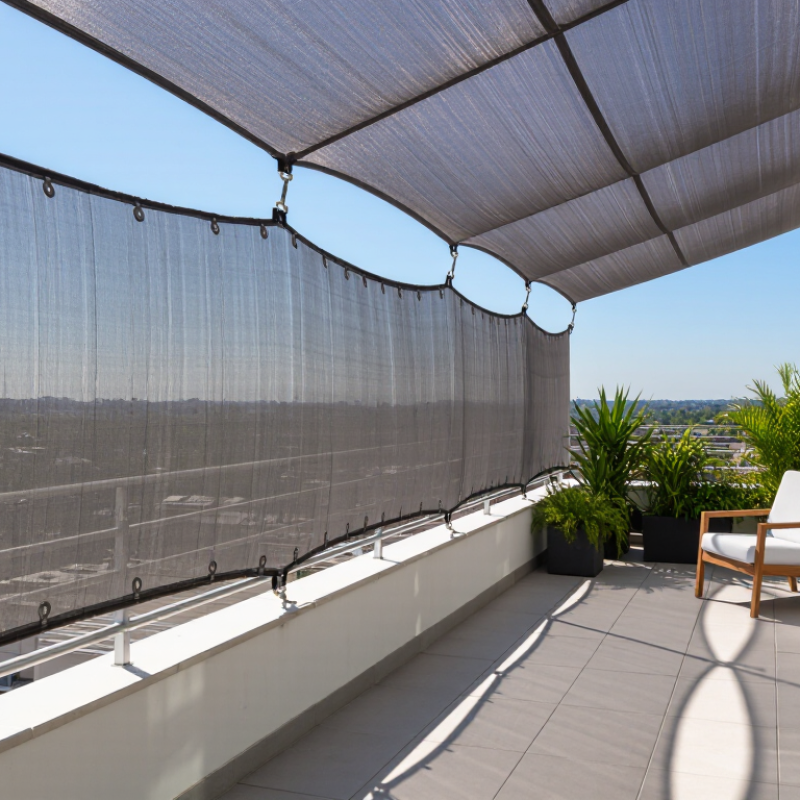
A balcony sun shade net is a breathable mesh fabric fixed above, beside, or around outdoor space. Its small openings filter sunlight before it reaches tiles, furniture, and glass doors. The net does not block heat completely. It reduces direct radiation while allowing air to move through.

Material density controls performance. A 70% shade net blocks more sunlight than a 50% version, but it can make a balcony feel darker. The U.S. Department of Energy reports that exterior awnings can reduce solar heat gain by up to 65% on south-facing windows and 77% on west-facing windows. A balcony net is not an awning, so these figures are useful benchmarks, not promises. The International Energy Agency also reports that buildings consume about 30% of global final energy. Small cooling improvements still matter.

The U.S. Department of Energy reports that exterior awnings can reduce solar heat gain by up to 65% on south-facing windows and 77% on west-facing windows.

I once assumed darker fabric always meant better cooling. That was too simple. Airflow, installation angle, balcony direction, and local wind matter more than color alone. Choose UV-stabilized polyethylene, reinforced edges, and secure fasteners. Check the fabric’s shade percentage and wind rating before buying.

Tips: Measure the mounting points, not just the balcony floor. Leave a small ventilation gap near walls. Inspect stitching after storms. A loose net can flap loudly and may fail sooner. The best choice balances shade, airflow, visibility, and safe attachment.

Key Factors for Choosing the Right Shade Net

How to Choose the Best Sun Shade Net for Balcony?

Choosing a balcony shade net starts with the balcony’s direction, not its color. South- and west-facing spaces usually receive stronger afternoon sunlight. Observe the area for two days. Note when the floor, chairs, or plants become uncomfortably hot.

Shade density matters. A light mesh may keep the balcony bright while reducing glare. A denser mesh offers stronger cooling but can make the space feel dark. For herbs and flowering plants, check their sunlight needs before covering the whole railing. Some plants need morning light.

I once chose a dense net for a plant-filled balcony, and several leaves became pale. The net worked, but my planning did not.

Material quality affects service life. Look for UV-resistant fabric with reinforced edges and evenly spaced eyelets. Measure the installation area carefully, then allow a small margin for secure attachment. The net should remain firm without pulling sharply against the railing.

Wind is easy to underestimate. Test the fixing points by hand, especially near corners. Weak ties may loosen after repeated gusts. Choose breathable mesh rather than a fully sealed sheet when airflow is important. This can reduce heat buildup.

Inspect the fabric after heavy rain and strong wind. Small tears can spread quickly. Check building rules before attaching anything permanently, because balcony structures and exterior fixtures may have specific requirements.

No option is perfect. The right net balances shade, airflow, visibility, plant health, and secure installation.

How to Compare Materials, Shade Rates, and Durability

How to Choose the Best Sun Shade Net for Balcony?

Material affects comfort, airflow, and service life. High-density polyethylene is lightweight, breathable, and suitable for exposed balconies. Polyester feels tighter and looks neater, but it may retain more heat. Knitted fabric can handle small movements without tearing easily. Check for UV stabilization, reinforced edges, and rust-resistant eyelets. These details often matter more than appearance.

Shade rates need careful comparison. A 70% net usually reduces strong sunlight while preserving useful daylight. An 85% or 90% net offers deeper shade, but the balcony may become noticeably darker. A high rating is not automatically better. Consider the balcony’s direction, nearby walls, plants, and daily use. Morning sun may need less coverage than intense afternoon sun. Leave space for ventilation.

Durability depends on more than fabric thickness. Examine stitching, corner reinforcement, and attachment points. A thick net can still fail when wind pulls against weak edges. Measure the area accurately, then allow slight movement without making the net loose. Tight installation looks clean. It can also increase stress during storms. No material is perfect. A shade net may fade, collect dust, or loosen over time. Clean it gently and inspect the seams each season. I would rather replace a small worn fastener than ignore one loose corner.

How to Measure and Install a Balcony Shade Net Safely

Choosing the Best Sun Shade Net for a Balcony

Measure and Install It Safely

A balcony shade net should fit the space, tolerate outdoor weather, and allow steady airflow. Measure the full width and height of the area, including the frame or railing. Record each measurement twice. I once trusted a single measurement and created an awkward gap near one corner. That small error reduced shade and looked untidy. Add a few centimeters only when the mounting system requires overlap. Check the net’s fabric density, edge reinforcement, and attachment points. A tighter weave blocks more sunlight, but it can also catch stronger wind.

Tips: Use a tape measure, pencil, and level. Mark every fixing point before drilling. Do not attach the net to weak railings, loose pipes, or decorative parts. Ask a qualified installer to check unfamiliar walls or high balconies. Local building rules may also restrict drilling or exterior fixtures.

Install the net from a stable position, never from the outside of the balcony. Keep both feet secure, and use another person when handling wide material. Fasten the upper edge first, then attach the sides and lower edge evenly. Avoid excessive tension, because fabric and fixings need slight movement. After installation, pull each corner gently and inspect the anchors. Look for twisting, sharp edges, and loose hardware. Recheck the net after heavy rain or strong wind. My first installation was too tight, and one corner pulled away after several days. A slower adjustment would have prevented it.

How to Maintain and Replace Your Balcony Shade Net

How to Choose the Best Sun Shade Net for Balcony?

A balcony shade net works well only when it remains clean, secure, and flexible. Its service life depends heavily on regular maintenance. Inspect it monthly, especially after strong wind or heavy rain. Look for brittle fibers, loose stitching, mildew, and damaged hooks. Run your fingers along the seams. They often weaken before the net visibly tears. I once ignored a small split near a corner. It widened within weeks and made the whole panel unstable. That mistake changed my inspection routine.

Remove dust with a soft brush or gentle water spray. Use lukewarm water and mild soap for stains. Rinse thoroughly afterward. Never scrub aggressively. Let the net dry completely before reattaching it. Damp fabric can trap moisture against walls and metal fittings. Check hooks, cords, and fasteners for rust or stretching. Replace damaged hardware instead of tying temporary knots. Do not overtighten the net. Excessive tension can damage both the mesh and balcony fixtures. On windy days, listen for flapping or sharp tapping sounds.

Replace the net when several holes appear, the fibers feel brittle, or sunlight passes through unevenly. Measure the balcony opening carefully, including attachment points. Leave a small allowance for tension and movement. Choose mesh density according to sunlight, airflow, and privacy needs. A tighter mesh may block more sun but reduce ventilation. If the frame has shifted, correct it before installing new material. Ask a qualified installer when fittings are high, loose, or difficult to reach. I still recheck my measurements twice; rushing this step is an avoidable error.

How to Choose the Best Sun Shade Net for Your Balcony?

Use the chart to compare common shade-density options. Higher shade density usually provides stronger sunlight reduction but lowers airflow and outside visibility.

How to Maintain and Replace Your Balcony Shade Net

Clean the net with mild soap and water every few months, inspect seams and fixing points after storms, and allow it to dry completely before storage. Replace the net when it becomes brittle, develops large tears, loses tension, or no longer provides consistent shade. In normal outdoor use, replacement is commonly needed after about 3–5 years, depending on sunlight, wind, moisture, and material quality.

FAQS

Which material suits an exposed balcony best?

High-density polyethylene is lightweight, breathable, and practical for outdoor balconies. Knitted fabric tolerates small movements without tearing easily.

Is a higher shade rate always better?

Not always. A 70% net reduces strong sunlight while keeping useful daylight. An 85% or 90% net creates deeper shade but may darken the balcony.

How should balcony direction affect shade selection?

Morning sunlight may need less coverage. Intense afternoon sunlight often requires stronger shading. Nearby walls and plants can also increase heat.

What details indicate a durable shade net?

Check UV stabilization, reinforced edges, strong stitching, and rust-resistant eyelets. Weak corners can fail, even when the fabric feels thick.

How should I measure the balcony?

Measure the full width and height, including rails or frames. Record each measurement twice. Measure twice.

Should the net be installed tightly?

The net should look neat but retain slight movement. Excessive tension increases stress during storms and may pull corners away.

How can I install the net more safely?

Mark every fixing point before drilling. Avoid weak railings, loose pipes, and decorative parts. Install from a stable position inside the balcony.

How should I maintain the shade net?

Clean it gently and inspect seams each season. Check corners after heavy rain or strong wind. Replace a worn fastener early. Small defects matter.

Conclusion

Choosing the best Sun Shade Net For Balcony begins with understanding how it works. Made from breathable mesh, it blocks or filters sunlight while allowing air to circulate, helping reduce heat, glare, and fading without completely enclosing the space. Consider your balcony’s direction, local weather, available fixing points, desired privacy, and the shade level needed for plants, furniture, or relaxation. Compare materials by their resistance to ultraviolet exposure, moisture, wind, and tearing. A higher shade rate offers stronger protection, while a lighter mesh may preserve more natural light and visibility.

Before purchasing, measure the balcony’s width, height, and attachment areas carefully, allowing enough coverage without creating excessive wind resistance. During installation, use secure, compatible fasteners and avoid blocking doors, drainage paths, or emergency access. Check the net regularly for loose edges, stains, mildew, and weakened fabric. Clean it gently with water and mild soap, then let it dry fully. Replace the net when it becomes brittle, torn, permanently stretched, or unable to provide reliable shade.


Charlotte

Charlotte

Charlotte is a seasoned marketing professional with a deep understanding of the company's portfolio and a passion for elevating its presence in the market. With a keen eye for detail and a commitment to excellence, she ensures that our professional blog is regularly updated with insightful articles......