Choosing the best Shade Netting For Chickens in 2026 requires more than picking the darkest fabric. A suitable cover must reduce heat while preserving airflow, visibility, and safe movement around the coop. Chickens may gather beneath shade during bright afternoons, but crowded birds can still overheat. The ground may feel cool. The air above it may not.
Dr. Susan Watkins, a poultry environmental-management specialist, offers a practical reminder: “Birds cannot sweat, so ventilation and shade must work together.” That principle guides this review. We will examine shade percentage, fabric strength, UV resistance, installation height, and cleaning needs. A breathable knitted mesh can soften harsh sunlight without trapping every warm pocket of air. However, dense material may block useful breezes when placed too close to the roof.
Real conditions matter. A backyard flock beside a hot concrete wall needs different protection from birds under mature trees. Black mesh often creates deeper shade, while lighter colors may reflect more sunlight. Neither option is automatically best. I have seen keepers focus on coverage and overlook loose edges, sharp fasteners, or rainwater collecting above a run. Those details deserve attention.
The right choice should leave chickens alert, dry, and spread comfortably across the enclosure. Watch their behavior at midday. Panting, open-wing postures, and repeated crowding signal that the setup needs improvement. This guide compares practical options for 2026, while acknowledging one uncomfortable truth: no netting can replace clean water, cross-ventilation, and regular observation.
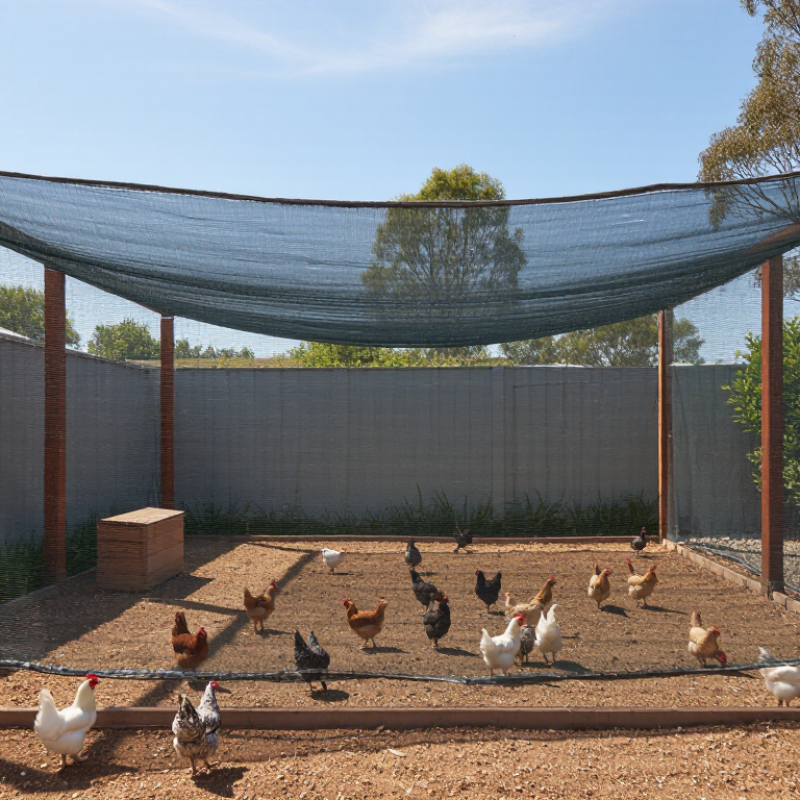
What Is the Best Shade Netting for Chickens in 2026?
Chickens can begin showing heat-stress risks when temperatures reach 25–30°C. Research summarized in Poultry Science links rising heat with panting, reduced feeding, poorer growth, and lower egg output. Humidity makes the danger worse because birds cannot release body heat efficiently.
Shade is not decoration.
For most backyard and small-scale poultry areas, a breathable knitted net is more practical than solid plastic sheeting. A 70–90% shade level can reduce direct solar load while preserving airflow. The net should sit above the run, leaving open sides for cross-ventilation. White or light-colored material may reflect more radiation, but color alone does not guarantee cooling. The mesh structure matters more.
USDA Agricultural Research Service guidance emphasizes water access, airflow, and heat monitoring during hot weather. The FAO also identifies heat exposure as a major climate risk for poultry productivity. Place drinkers under shade, refresh water frequently, and check birds at midday. Panting, wings held away from the body, lethargy, and crowding near air movement require immediate attention.
A temperature threshold is only a warning, not a complete safety rule. A still, humid 27°C afternoon may be more dangerous than a dry, breezy 31°C morning. I would avoid covering every surface with netting. Excessive shade can reduce useful daylight and trap warm air when installed poorly. Measure temperature at bird level, not beside the roof. Small details matter.
How Chickens Overheat: Heat Stress Risk Rises Above 25–30°C
| Shade Netting Option | Typical Shade Rating | Sunlight Reduction | Airflow Suitability | Best Use for Chickens | Heat-Stress Protection | Important Installation Guidance |
|---|---|---|---|---|---|---|
| Knitted HDPE shade net UV-stabilized, breathable mesh |
50% | Approximately 50% of direct solar radiation, depending on mesh construction and color | Very good; open knitted construction allows air movement | Cooler climates, mild summer conditions, and runs that already have natural shade | Moderate protection during temperatures around 25–30°C | Install above the run with an air gap. Use as a first layer where ventilation is more important than maximum solar blocking. |
| Knitted HDPE shade net UV-stabilized, breathable mesh |
70% | Approximately 70% of direct solar radiation, depending on the product specification | Good when stretched overhead and kept away from walls | Most warm-climate chicken runs and exposed outdoor areas | Strong general protection when combined with cool water and continuous airflow | Usually the best all-purpose balance between solar protection and ventilation. Keep the sides open unless wind, rain, or predators require screening. |
| Heavy-duty knitted HDPE shade net UV-stabilized, high-density mesh |
80% | Approximately 80% of direct solar radiation, depending on mesh construction | Fair to good; airflow can fall if the mesh is layered or installed too close to the flock | Very sunny locations, heat waves, and runs with little natural shade | High solar protection, but overheating can persist if ventilation is restricted | Use as an overhead canopy rather than a sealed enclosure. Provide openings on multiple sides and avoid stacking layers without testing airflow. |
| High-density shade cloth Very heavy mesh or tightly woven fabric |
90% | Approximately 90% of direct solar radiation, depending on the product specification | Limited to fair; the risk of trapped hot air is higher | Short-term emergency shading, extreme sun exposure, or small sections requiring maximum solar blocking | Potentially high protection, but poor ventilation may increase heat stress | Do not fully enclose the run in hot weather. Combine with large open sides, raised installation, and reliable air circulation. |
| Reflective aluminized shade mesh Reflective outer surface with open mesh |
70–90% | High solar reflection; the exact performance depends on the reflective coating and shade rating | Good if the mesh remains open and is installed with ventilation space | Open-sided runs exposed to intense sunlight and radiant heat | High potential protection from direct solar load | Install with the reflective side facing upward when specified by the manufacturer. Inspect regularly for damaged or flaking reflective material. |
| Natural shade from trees or roof overhangs Used alone or with mesh |
Variable | Variable; changes with sun angle, season, and canopy density | Very good when the area remains open and unobstructed | Permanent daytime shelter and a supplemental cooling area | Useful supplemental protection; it should not be the only option during extreme heat | Check the shaded ground throughout the day. Combine with overhead mesh if shade moves away from the run during the hottest afternoon period. |
| Outdoor Air Temperature | General Heat-Stress Concern | Recommended Shade-Netting Response | Other Immediate Measures |
|---|---|---|---|
| Below 25°C | Usually lower risk, although humidity, direct sun, breed, age, stocking density, and airflow still matter | 50–70% overhead shade is commonly adequate for exposed runs | Provide clean water, ventilation, and a dry, uncrowded resting area |
| 25–30°C | Increasing risk; chickens may begin panting, drinking more, and reducing activity | 70% breathable overhead shade is a practical general choice | Increase airflow, refresh water frequently, reduce crowding, and monitor birds during the afternoon |
| Above 30°C | High risk, especially with high humidity, still air, direct sun, or heavy birds | Use 70–80% shade with open sides; consider reflective mesh where radiant heat is severe | Provide multiple cool water points, maximize cross-ventilation, and move birds away from hot surfaces |
| Extreme heat or heat-wave conditions | Severe risk; heat stress can develop rapidly and may become fatal | Use layered protection only if airflow remains strong; avoid turning the run into a sealed, dark enclosure | Monitor for open-mouth breathing, wings held away from the body, weakness, collapse, or unusual lethargy and seek veterinary guidance immediately |
Practical conclusion: For most chicken runs, a UV-stabilized, knitted HDPE shade net rated around 70% offers the best balance of solar reduction and ventilation. An 80–90% rating can be useful in extreme sun, but excessive coverage or poor installation may trap hot air. Temperature alone does not determine heat stress; humidity, airflow, radiant heat, stocking density, breed, age, and access to water must also be considered.
It blocks roughly 30% of direct sunlight. It suits mild climates, partly covered runs, and flocks needing brighter daylight. One hot afternoon may prove it insufficient.
A 50% net balances sunlight reduction, airflow, and visibility. It often suits ordinary summer conditions. Install it above the run, not directly on the roof.
An 80% net provides stronger midday protection for exposed runs and severe summer heat. Reflective ground can increase heat, too. The run may become gloomy.
No. Shade ratings describe blocked sunlight, not guaranteed temperature reduction. Poor airflow can keep the area hot and humid. Shade is not ventilation.
Dry, breezy locations may need lighter coverage. Humid, still yards need open weaves and clear side gaps. Local conditions matter more than color.
Watch for panting, spread wings, unusual lethargy, and increased time near drinkers. Check the flock around 1 p.m. Quiet birds are not always comfortable.
Place sensors at chicken height, away from direct sunlight. Record temperature, humidity, panting, water use, and resting locations. One reading can mislead.
Yes. Add overhead shade before increasing density when afternoon panting rises. Improve airflow when humidity stays high. I first favored maximum coverage, but that was incomplete.
Younger birds and heavier breeds may show heat stress earlier. Watch their breathing, posture, and movement separately. Assumptions can fail.
Check tension, sagging, tears, and dust every week. Replace or adjust damaged sections before they reduce airflow. Small defects grow.
Choosing the best Shade Netting For Chickens starts with understanding how quickly poultry can overheat. Heat-stress risk increases when temperatures rise above approximately 25–30°C, especially in direct sunlight and poorly ventilated areas. Shade cloth rated at 30% offers light cooling while preserving brightness, 50% provides a balanced reduction in solar exposure for most runs, and 80% delivers deeper shade for extremely hot climates. The right percentage should be selected according to local temperatures, sunlight intensity, and heat-stress observations.
HDPE knitted netting is a practical choice because it combines UV protection, durability, and airflow without creating a sealed, stuffy space. When installing it, provide roughly 1–2 meters of clearance above the chickens’ living area to improve ventilation and reduce trapped heat. Secure the edges firmly, while keeping the structure stable and free from sharp hazards. Regularly monitor panting, lethargy, crowding, and water consumption, then adjust shade coverage as seasonal conditions change. A climate-based approach helps maintain a cooler, safer, and more comfortable chicken environment.

 Chiyang Net