A pergola can feel open and airy until midday sun turns the seating area into a hot, exposed patch. The right Pergola Netting Cover can soften glare, reduce bothersome insects, and make outdoor meals more comfortable. The wrong one may sag, block too much light, or flap loudly when wind picks up. Small details matter.
This guide’s illustrative outdoor-covering specialist, Rowan Hale, offers a practical buying principle: “Choose the mesh for the conditions you actually face, then check how securely it attaches.” This is an editorially created line, not a sourced quotation. It reflects the checks buyers can make: mesh openness, fabric durability, dimensions, edge finishing, and attachment points. Measure the pergola frame, including any beams or fittings that could obstruct installation. Check product specifications rather than relying on appearance alone.
Look closely at the details. Can the cover be removed for cleaning? Are seams reinforced? Will the fasteners suit your frame? These questions help narrow choices across fixed, retractable, and seasonal styles. A close-weave mesh may offer more shade, but it can also reduce airflow. No single cover suits every patio. Wind exposure, tree debris, and the direction of afternoon sun can change what works. Even a careful measurement can miss a low beam or uneven post. Recheck before ordering. This buying guide compares useful features, common trade-offs, and installation considerations so you can choose with clearer expectations and fewer avoidable surprises.
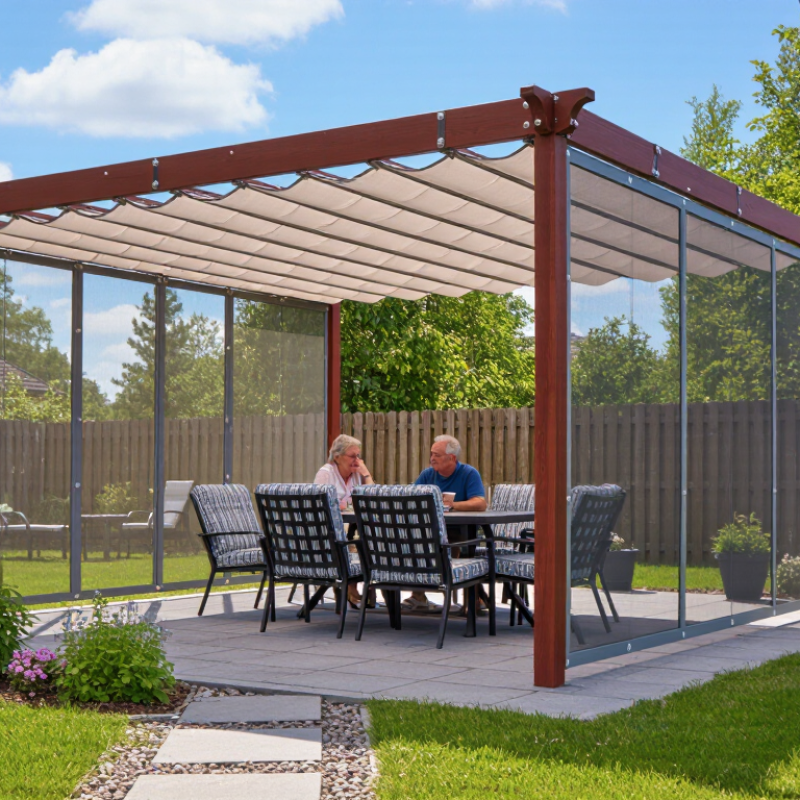
2026 Top Pergola Netting Cover Buying Guide
Pergola netting ratings usually describe shade coverage, not total comfort. A 70% cover blocks roughly 70% of direct sunlight, leaving about 30% open area for airflow. A 95% cover creates deeper shade, but it may also reduce breezes and make the space feel warmer on humid days. The U.S. Department of Energy reports that exterior window awnings can reduce solar heat gain by up to 65% on south-facing windows and 77% on west-facing windows. Pergola fabric will perform differently, so those figures are useful context, not a guarantee.
For 2026 buying decisions, compare openness factor, fiber construction, color, edge reinforcement, and drainage design. ASHRAE Handbook—Fundamentals explains that solar heat gain changes with orientation, season, latitude, and surface optical properties. Therefore, a 70% netting cover may work well over a north-facing seating area, while a west-facing pergola may need 90–95% coverage. Dark mesh often provides sharper visual shade, though it can absorb more heat. Light mesh may reflect more radiation, but glare can remain.
My practical caution is simple: shade percentages are not perfectly standardized across sellers. Ask for test methods and sample swatches. Check the fabric at noon, not only indoors. A dense 95% screen may look ideal on paper, yet feel stuffy when wind drops. That trade-off deserves attention.
Compare common pergola-cover materials by their typical shade rating and practical features. Shade percentages are approximate product-category ranges, not a guarantee of UV protection; actual performance depends on fabric construction, color, installation, and the manufacturer’s test method.
| Netting type | Typical shade rating | Construction and airflow | Best suited for | Buying considerations |
|---|---|---|---|---|
| Open-weave HDPE shade cloth | 70–80% | Woven or knitted high-density polyethylene; open structure allows airflow and some light through. | Everyday patio shade where ventilation and filtered daylight matter. | Check the stated shade rating, edge reinforcement, UV stabilization, and suitability for outdoor exposure. |
| Medium-density knitted HDPE netting | 80–90% | Knitted polyethylene mesh with a denser construction than open-weave cloth; retains useful airflow. | Reducing direct sun over seating or dining areas while keeping the space relatively airy. | A tighter mesh may catch more wind; use suitable fixings and follow installation guidance. |
| High-density privacy shade mesh | 90–95% | Dense knitted or woven mesh; provides stronger visual screening and typically less airflow than lighter mesh. | Areas needing strong daytime shade or additional screening from nearby views. | Confirm that the pergola structure and attachment points can accommodate increased wind load. |
| Woven HDPE shade fabric | 70–90%, depending on weave density | Flat interlaced strands; shade and airflow vary with strand width and spacing. | Custom-cut covers and installations where a specific weave or finish is preferred. | Inspect the fabric specification and reinforced edges; category labels alone do not establish a tested shade rating. |
| Insect-screen netting | Usually below 70%; not primarily a shade cloth | Fine mesh designed to limit insect passage while allowing ventilation; shade depends on mesh and color. | Enclosing pergola sides to help reduce insects, rather than providing substantial overhead shade. | Choose by mesh opening and intended insect control; pair with a separate shade cover if needed. |
Selection note: A shade rating describes the proportion of sunlight blocked under the test conditions stated by the supplier; it is not automatically an SPF or a UV-protection certification. For a 70–95% shade target, verify the exact rating and any UV-transmission test information on the product specification.
It blocks roughly 70% of direct sunlight, leaving about 30% open for airflow. Ratings may differ between sellers.
No. It creates deeper shade but can reduce breezes and feel warmer on humid days. Not always.
A north-facing seating area may work well with 70% coverage. West-facing spaces may need 90–95% coverage during strong afternoon sun.
Dark mesh can provide sharper visual shade but may absorb more heat. Light mesh may reflect more radiation, though glare can remain.
Compare the fabric’s openness, construction, reinforced edges, and drainage design. Ask for test methods and inspect a sample outdoors at noon.
Check it over the actual frame after rain. Water should pass through or shed away without forming heavy pockets.
Request current test documentation, fabric details, and installation limits. Flame-resistant material can still melt or burn near intense heat.
A five-year warranty may suit moderate sunlight; longer service claims need careful review. Check exclusions for wind, snow, cleaning, and installation.
Measure the frame carefully, clean the fabric gently, and record seasonal damage. Salt, ultraviolet exposure, and repeated tension can shorten its life. I would still treat any lifespan estimate cautiously.
Choosing the right Pergola Netting Cover in 2026 requires balancing shade performance, durability, safety, and installation needs. Begin by identifying the netting type and selecting a shade rating between 70% and 95%, depending on the desired balance of sunlight, airflow, and privacy. HDPE fabric weights from 185 to 340 GSM offer different levels of strength, with heavier materials generally providing improved durability for demanding outdoor use. UV protection should also be verified through UPF ratings from 30 to 50+ and, where available, recognized ASTM testing standards.
Before purchasing, confirm that the panel dimensions suit the pergola and that the tensioning system can maintain a secure, wrinkle-free fit. The cover should be appropriate for expected wind conditions of approximately 40–60 km/h. Finally, review drainage design, flame-resistance features, warranty coverage, and the expected 5–10-year service life. A careful comparison of these factors can help ensure reliable shade, weather resistance, and long-term value.

 Chiyang Net